VI International Conference ILIS
Epistemic Shift in the Post-Digital Society
The dilemma of knowledge production between generative models and quantum futures
14-15 May 2026
University of Naples Federico II
Department of Social Science,
vico Monte di Pietà, 1, Naples, Italy
twin host partner
University of Sharjah, United Arab Emirates
To participate in the seminar activities of the conference, please download and follow the instructions contained in the attachment “Student Participation.”
Please note that, in order to take part in the seminar activities and obtain the recognition of 2 ECTS credits (CFU), you must complete the form included in the attachment “Participation Form,” which must be sent to the email addresses of the tutors (giuseppemichele.padricelli@unina.it and noemi.crescentini@unina.it) no later than May 1 at 5pm.
In order to obtain the credits, students will be required to submit a written assignment to the tutors no later than May 25.
More info at labilis@unisa.it
Conference Committees
Executive Board: Felice Addeo, Angela Delli Paoli, Giuseppe Masullo (University of Salerno, IT), Gabriella Punziano (University of Naples Federico II, IT), Massimo Ragnedda (University of Sharjah, UAE).
Organizing Secretariat: Marianna Coppola (University Giustino Fortunato, IT), Noemi Crescentini, Vincenzo Laezza, Giuseppe Michele Padricelli (University of Naples Federico II, IT), Valentina D’Auria, Marco Di Gregorio, Vincenzo Esposito, Miriam Matteo, Francesco Notari (University of Salerno, IT), Edmondo Grassi (University San Raffaele, IT).
Local Organizing Committe: Suania Acampa, Francesco Amato, Caterina Ambrosio, Giammaria Bottoni, Rosanna Cataldo, Noemi Crescentini, Ciro Clemente De Falco, Cristiano Felaco, Ferdinando Iazzetta, Vincenzo Laezza, Giuseppe Michele Padricelli, Federica Palmieri, Rosa Sorrentino, Antonio Vettori.
Scientific board: Enrica Amaturo (Universiy of Naples Federico II, IT); Biagio Aragona (Universiy of Naples Federico II, IT); Davide Bennato (University of Catania, IT); Tiziano Bonini (University of Siena, IT); Alessandro Caliandro (University of Milan, IT); Marianna Coppola (University Giustino Fortunato, IT); Maria Paola Faggiano (University of Roma La Sapienza, IT); Caterina Foà (ISCTE -Lisbon University Institute, PT); Brian Gilley (Indiana University Bloomington, USA); Edmondo Grassi (University San Raffaele, IT); Estrella Gualda (Universidad de Huelva, SP); Allan Herison Ferreira (Universidade de São Paulo Brasil); Francesca Romana Lenzi (University of Foro Italico, IT); Giuseppe Maiello (University of Finance and Administration, Prague); Emiliana Mangone (University of Salerno, IT); Elvira Martini (University Giustino Fortunato, IT); Sergio Mauceri (University of Roma La Sapienza, IT); Francesco Mazzeo Rinaldi (University of Catania, IT); Beba Molinari (University of Tor Vergata, IT); Ilenia Picardi (Universiy of Naples Federico II, IT); Lucia Picarella (University of Foggia, IT); Riccardo Pronzato (IULM University, IT); Elisabetta Risi (IULM University, IT); Emilia Romeo (University San Raffaele, IT); Sonia Stefanizzi (university of Milano Bicocca, IT); Luciana Taddei (University of Catanzaro, IT); Giuseppe Tipaldo (University of Torino, IT); Vitor Tomé (Universidade Autónoma de Lisboa CIES-ISCTE-IUL, PT); Domenico Trezza (University Pegaso, IT); Luigi Tronca (University of Verona).
Permanent International Committee: Nick Boston (City University of New York City, USA); Chiara Diana (Université libre de Bruxelles, BE); Vulca Fidolini (Université de Strasbourg, DE); Brian Gilley (Indiana University Bloomington, USA); Estrella Gualda (Universidad de Huelva, SP); Giuseppe Maiello (University of Finance and Administration, Prague, CZ); Emily Manetta (University of Vermont, USA); Alexandra Marcotte (The Kinsey Institute, Indiana, USA); Alessandro Porrovecchio (Université du littoral Côte d’Opale, FR); Massimo Ragnedda (University of Sharjah, UAE); Jonah Steinberg (University of Vermont, USA); Marialaura Ruiu (Northumbria University, UK); Zuzana Virglerová (Univerzita Tomáše Bati ve Zlíně, SL).
About ILIS
The ILIS Network – International Lab for Innovative Cultural and Social Research – promotes
theoretical, epistemological, and methodological advancements in the social sciences through
sustained dialogue with leading scholars at both national and international levels. Its scientific
mission is to connect the understanding of contemporary social processes with recent developments
in research methods and techniques that have reshaped traditional approaches and introduced
innovative practices of data collection, analysis, and representation.
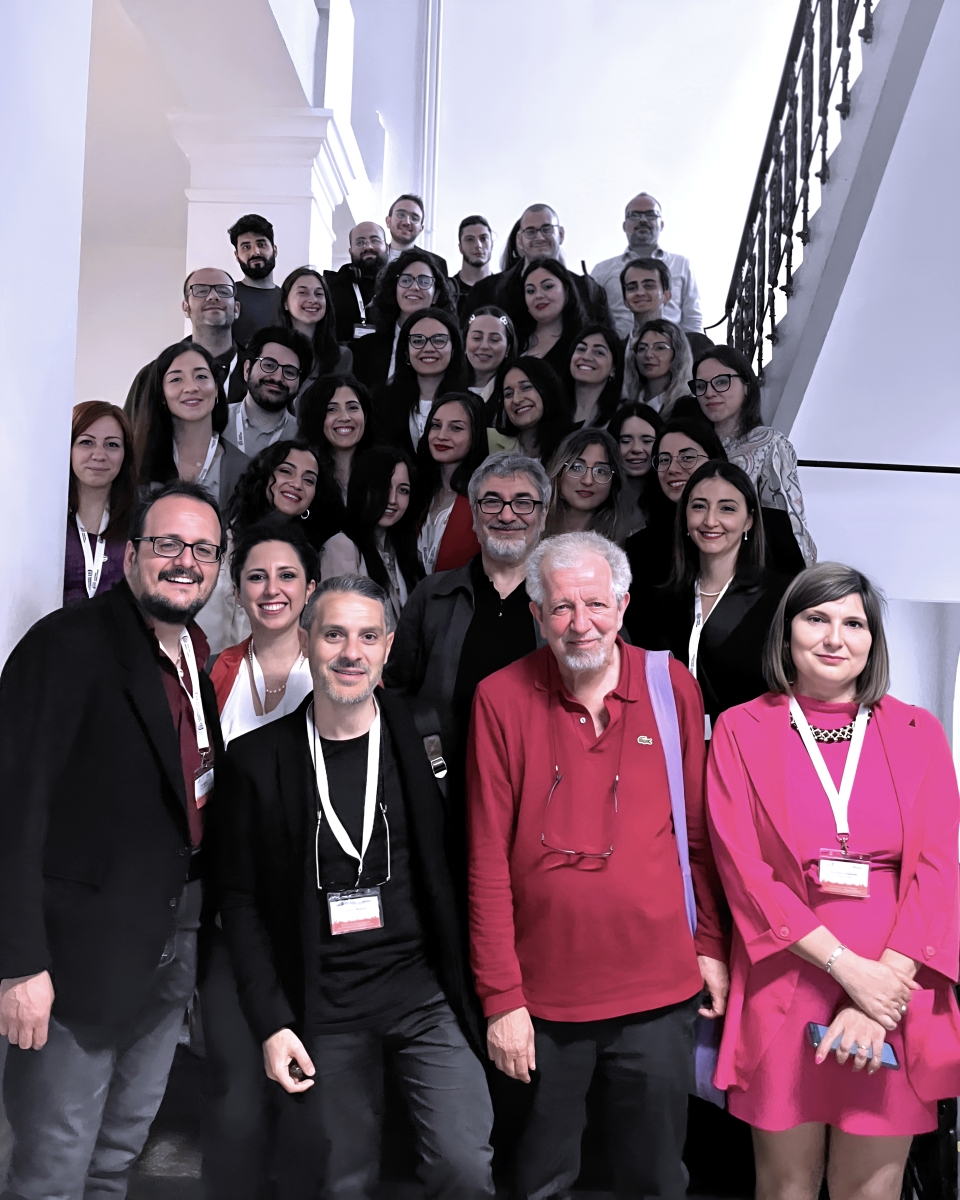
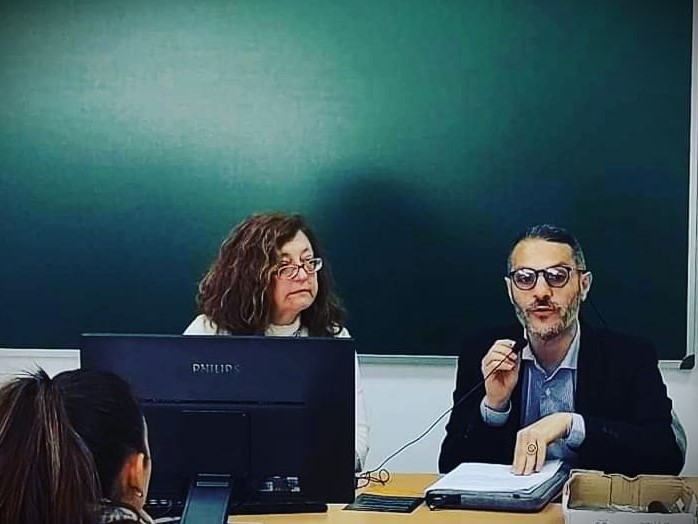
Over its past editions, ILIS has hosted distinguished scholars, and fostered wide international
participation — over 150 scholars from 14 countries in the 2024 edition.
The results of previous editions have led to numerous high-impact publications, including special
issues in Societies (MDPI), Sociologia Italiana – AIS Journal of Sociology, The Lab’s Quarterly,
International Journal of Sociology of Education, Mediascape, Italian Sociological Review, Frontiers
in Sociology, International Journal of Social Research Methodology (Taylor & Francis), and others,
as well as volumes in the McGraw-Hill Innovative Social Research series, IGI Global Handbook and
several Class A and scientific Italian journals.
Opening and Structure
The 2026 edition of the ILIS International Conference will be hosted for the first time by the University of Naples Federico II. The event will open with greetings by Anthony Giddens, followed by three Lectio Magistralis from Deborah Lupton, Richard Rogers, and Nick Couldry, who will address the transformations of knowledge production in an era of unprecedented digital and technological acceleration. After the keynote sessions, a plenary panel will bring together distinguished sociologists — including Enrica Amaturo, Tiziano Bonini, Sonia Stefanizzi, Giuseppe Tipaldo — to discuss the epistemic shifts in the post-digital society. One session will be held at the twin host partner, University of Sharjah, which will organise an invitation-only panel discussion on the same topics to be held afterwards, under the scientific responsibility of Prof. Massimo Ragnedda. Subsequent sessions will include parallel panels selected through this open and competitive call for abstracts. The conference will conclude with the Natale Ammaturo Award for early-career researchers and the Societies–MDPI Publication Award for the best paper in Digital Social Research.
Conference Theme
In the post-digital era, the very foundations of knowledge production are being radically redefined. What once appeared as a relatively stable epistemic framework — grounded in human interpretation, methodological reflexivity, and disciplinary boundaries — is now challenged by the rise of autonomous systems of meaning-making. The ascent of Generative Artificial Intelligence (GenAI) and quantum computation marks an unprecedented shift in the architecture of inquiry, moving from human-guided analysis to machine-generated inferences and simulations.
This epistemic reconfiguration poses pressing questions for the social sciences: How do these technologies transform the conditions of knowing, validating, and disseminating knowledge? What remains of the interpretive and critical vocation of the researcher in an environment increasingly mediated by algorithmic logics and probabilistic computation? And, crucially, how can social inquiry remain accountable and reflexive in the face of opaque, automated, and self-evolving systems of cognition?
The theme of “Epistemic Shifts in the Post-Digital Society: The Dilemma of Knowledge Production between Generative Models and Quantum Futures” aims to explore these transformations at both theoretical and methodological levels. It calls for a critical examination of the post-human epistemologies emerging from hybrid entanglements between human and non-human agents, between epistemic infrastructures, adaptive epistemologies, and cognitive ecologies (Knorr-Cetina, 2007; Leonelli, 2016).
Generative models — such as large language models (LLMs) and multimodal AIs — now produce not only representations of social phenomena but also interpretive frameworks, synthetic data, and simulated social realities. They shape what can be known, who can know, and under what conditions. Their outputs are not neutral but embedded in cultural biases, epistemic asymmetries, and political economies of data (Couldry & Mejias, 2019; Crawford, 2021). These technologies challenge the traditional social research paradigm based on observation, participation, and interpretation, replacing it with predictive and generative epistemics (Amaturo & Aragona, 2021; Punziano, 2025), in which data themselves become agents of knowledge creation.
In this context, another key issue remains how it is possible to access and investigate the sociotechnical production of AI-based systems. These technologies are socio-technical artifacts, whose production is the result of specific human choices and negotiations, situated in certain cultural and spatio-temporal contexts (Kaun & Männiste, 2025). Given the plethora of generative models that intervene in social research, researchers are urged to scrutinize and destabilize the “thingness of AI” (Suchman, 2023), i.e., its controversial representation as a monolithic and stable entity. However, practical limitations in accessing both the inner workings of these computational systems and their sites of production persist, rendering such research endeavours extremely difficult, yet all the more necessary (Pronzato & Risi, 2025).
Alongside these critical concerns, generative AI and algorithmic systems allow us to traverse interstices toward unprecedented opportunities for social research and knowledge production. They enable new forms of pattern recognition across vast datasets, facilitate transdisciplinary ramification, and allow researchers to explore counterfactual scenarios and simulations that would be impossible with traditional approaches alone. These technologies can co-act with human analytical capacities, democratize access to sophisticated research tools (Benkler, 2006), and accelerate the discovery of hidden correlations in complex social phenomena. The emergence of what has been conceptualized as an algomorphic society (Grassi, 2025) – where algorithms actively shape social structures, identities, and interactions – requires both critical vigilance (Noble, 2018) and creative engagement with non-human entities deeply integrated into the existence of social functioning in a structural symbiosis with the human entity. Understanding algorithms as social agents that co-constitute reality through dynamic processes of mutual adjustment (Pickering, 1995) requires researchers to develop hybrid methodologies that harness computational power while maintaining reflexive awareness of their embedded assumptions and transformative effects. The call to the scientific and social community lies in recognizing and establishing reference paradigms for their integration, as they carry with them the needs, ambitions, perspectives, fears, and behavioural patterns of those with whom they interact. These are social subjects that trace reality, contribute to shaping its logics, expand symbolic boundaries, and renegotiate classificatory ones according to the theory of social construction of technology, as well as of society.
At the same time, the rise of quantum computing and quantum social theories (Fuchs, 2022; Zohar, 1990) introduces a different kind of epistemic rupture. Rather than relying on deterministic or probabilistic reasoning, quantum epistemologies embrace uncertainty, entanglement, and superposition as core interpretive principles. Applied to social sciences, such frameworks open new possibilities for conceptualising complexity, relationality, and non-linearity — yet they also challenge conventional methodologies of validation, causality, and inference (Barad, 2007; Valsiner, 2007).
Between the generative/adaptive and the quantum paradigms lies an unresolved tension: the former promises automation of meaning, the latter re-enchantment of uncertainty. Together, they redefine what counts as “evidence”, “truth”, and “knowledge” in a digitally mediated society. This tension urges social scientists to rethink their epistemic accountability, the boundaries of reflexivity, and the ethics of delegated cognition.
Moreover, the platformization of knowledge (Van Dijck et al., 2018) and the rise of infrastructural epistemics (Plantin et al., 2016) have turned digital platforms, data brokers, and machine-learning systems into central actors in the governance of knowledge. Research infrastructures are increasingly shaped by proprietary algorithms, API restrictions, and commercial logics, which condition not only access to data but also the very structure of inquiry. In this landscape, open science and ethical transparency must be revisited to confront asymmetries in data access, computational power, and epistemic authority.
The 2026 ILIS Conference invites contributions that interrogate these transformations by addressing questions such as: How do generative and quantum paradigms reshape the epistemic status of the social sciences? What new ethical-political responsibilities arise when knowledge is co-produced with non-human agents? How can methodological pluralism endure in an age of algorithmic standardisation and automated inference? How can we reimagine training, interdisciplinarity, and reflexivity for researchers navigating post-digital epistemic infrastructures?
Ultimately, this conference aims to provide a space for epistemological experimentation and theoretical innovation, bringing together scholars across disciplines to rethink the future of social knowledge under the dual horizon of generative automation and quantum complexity. It encourages dialogue among those envisioning a renewed sociology of knowledge that takes seriously the ontological implications of digital and quantum mediation — where data, code, and cognition are no longer separate domains but entangled conditions of knowing.
Drawing on the works of the invited speakers, the conference seeks to expand current debates on digital mediation (Rogers, 2019), critical data epistemologies (Couldry & Mejias, 2019), and reflexive and environmental dimensions of digital transformation (Lupton, 2015), connecting them to recent discussions about computational governance, platform epistemology, and algorithmic knowledge production (Beer, 2019; Pasquale, 2020; Bonini & Trerè, 2024; Venturini and Rogers, 2025).
Suggested Topics
The conference welcomes theoretical, methodological, and empirical contributions addressing (but
not limited to) the following themes:
- Epistemic regimes: generative models vs. exploratory–quantum models;
- Theoretical implications of algorithmic and quantum mediation in the social sciences;
- Methodological innovations and hybrid designs;
- Case studies of knowledge production and framing processes;
- Algomorphic society and human-algorithm symbiosis: power dynamics, digital identities, new forms of actoriality;
- Social construction of technology: symbolic boundaries, classificatory logics, epistemic infrastructures;
- Emotions and digital cognition: algorithmic affects, mediated empathy, language transformations;
- Memory studies and digital archives: mutations of memory, algorithmic temporalities;
- Reflexivity and researcher positioning within new epistemic paradigms;
- Ethics of AI and Ethical AI;
- Datafication, big data, simulations, and predictive models;
- Education, policy, and public understanding of current forms of knowledge production (also) based on AI;
- Visualisations, interpretive interfaces, and new forms of knowledge representation.
Awards
The conference will assign two Best Paper Awards:
- The Natale Ammaturo Award – for the best paper by an early-career researcher (PhD candidate or within three years post-PhD);
- The Societies–MDPI Award – for the best contribution in Digital Social Research, which will be published free of charge in Societies (MDPI) after peer review.
Registration anf fees
- Registration deadline for presenters: 10 April 2026
- Permanent position (online or onsite): €130
- Non-permanent position and Students (online or onsite): €100
At least one fee per accepted paper must be paid. If at least one author holds a permanent position (researcher, associate/full professor, etc.), the applicable fee is €130; if all authors are non-permanent (students, fellows, etc.), the fee is €100. Authors with limited funding may apply for partial fee support by writing to labilis@unisa.it and providing justification.
Please note: each author may submit a maximum of two papers, one as corresponding author and one as co-author. The link for the payment will be sent together with the acceptance e-mail.
Publication Opportunities
Selected high-quality papers will be invited for publication in:
- Selected Journal (Class A – ANVUR ranking): a special issue will be hosted by Society Register (Reconfiguring Knowledge Production in Post-Digital Society and Social Inquiry); a special issue will be dedicated on Cambio. Rivista sulle Trasformazioni Sociali (Entangled Epistemologies: Reimagining Knowledge and Society in the Post-Digital Age); a topic series will be held by Societies MDPI (Epistemology, methodology and ontology of a post-digital social inquiry – the APC here are required but all the member of the ILIS Network could apply with a special discount of 10%)
- McGraw-Hill Innovative Social Research series: The Power of Knowledge Production in a Post-Digital Social Research
- IGI Global Handbook series: Rethinking Knowledge Production in the Age of Generative AI and Quantum Inference
References
- Amaturo, E., & Aragona, B. (2021). Critical optimism: A methodological posture to shape the future of digital social research. Italian Sociological Review, 11(4S), 167-167.
- Barad, K. (2007). Meeting the Universe Halfway: Quantum Physics and the Entanglement of Matter and Meaning. Duke University Press.
- Beer, D. (2019). The Data Gaze: Capitalism, Power and Perception. Sage.
- Benkler, Y. (2006). The Wealth of Networks: How Social Production Transforms Markets and Freedom. Yale University Press.
- Bonini, T., & Treré, E. (2024). Algorithms of resistance: The everyday fight against platform power. MIT Press.
- Couldry, N., & Mejias, U. (2019). The Costs of Connection: How Data Is Colonizing Human Life and Appropriating It for Capitalism. Stanford University Press.
- Crawford, K. (2021). Atlas of AI: Power, Politics, and the Planetary Costs of Artificial Intelligence. Yale University Press.
- Fuchs, C. (2022). Digital Capitalism: Media, Communication and Society. Routledge.
- Grassi, E. (2025). The silent revolution of algoagents: relational reconfigurations and emerging paradigms. Sicurezza e Scienze Sociali, 2, 69-79. https://doi.org/10.5281/zenodo.17297462
- Kaun, A., & Männiste, M. (2025). Public sector chatbots: AI frictions and data infrastructures at the interface of the digital welfare state. New Media & Society, 27(4), 1962-1985.
- Knorr-Cetina, K. (2007). Culture in Global Knowledge Societies: Knowledge Cultures and Epistemic Cultures. Interdisciplinary Science Reviews, 32(4), 361–375.
- Leonelli, S. (2016). Data-Centric Biology: A Philosophical Study. University of Chicago Press.
- Lupton, D. (2015). Digital Sociology. Routledge.
- Noble, S. U. (2018). Algorithms of Oppression: How Search Engines Reinforce Racism. NYU Press.
- Pasquale, F. (2020). New Laws of Robotics: Defending Human Expertise in the Age of AI. Harvard University Press.
- Pickering, A. (1995). The Mangle of Practice: Time, Agency, and Science. University of Chicago Press.
- Plantin, J. C., Lagoze, C., Edwards, P. N., & Sandvig, C. (2016). Infrastructure Studies Meet Platform Studies in the Age of Google and Facebook. New Media & Society, 20(1), 293–310.
- Pronzato, R. & Risi, E. (2025). Research on and through generative AI? An inevitable entanglement. The Lab’s Quarterly, XXVII(3), 167-192.
- Punziano, G. (2025). Adaptive Epistemology: Embracing Generative AI as a Paradigm Shift in Social Science. Societies, 15(7), 205.
- Rogers, R. (2019). Doing Digital Methods. Sage.
- Suchman, L. (2023). The uncontroversial ‘thingness’ of AI. Big Data & Society, 10(2), 20539517231206794.
- Van Dijck, J., Poell, T., & De Waal, M. (2018). The Platform Society: Public Values in a Connective World. Oxford University Press.
- Valsiner, J. (2007). Culture in minds and societies: Foundations of cultural psychology. Sage.
- Venturini, T., Rogers, R. (2025). Digital Methods: A Short Introduction. Polity.
- Zohar, D. (1990). The Quantum Self. Bloomsbury.
For any inquiries, please contact: ILIS 2026 Organising Committee at labilis@unisa.it.